A is for Angry. Anger destroys more than you think. The second element of the HALT strategy
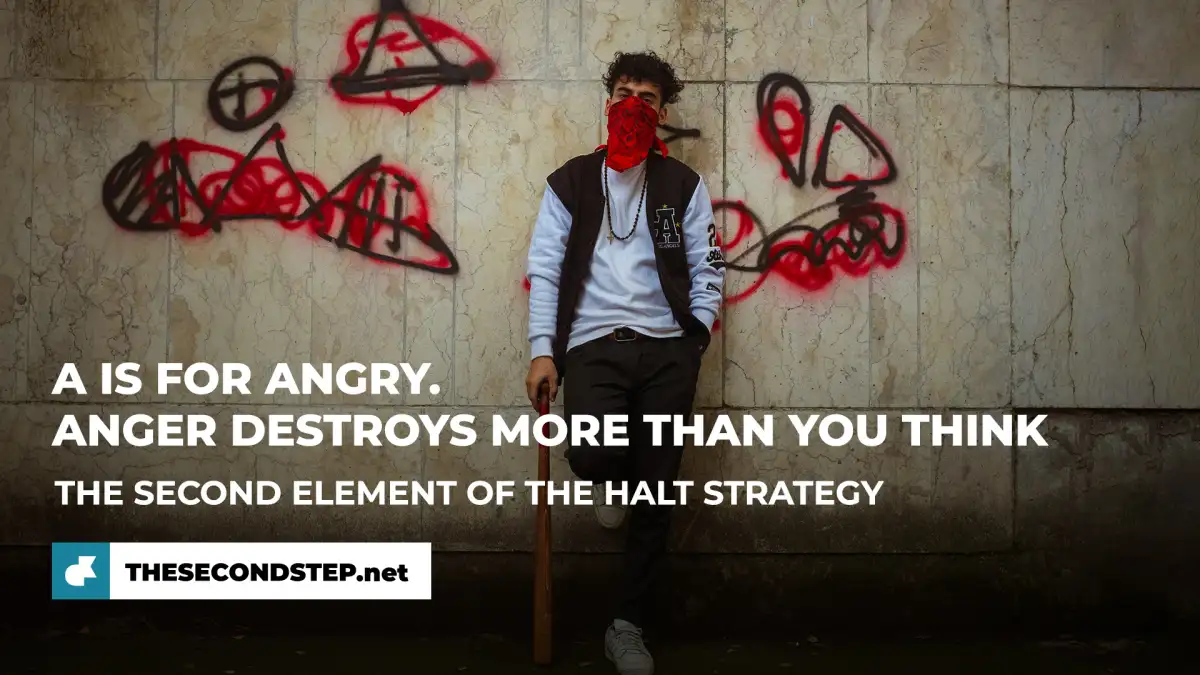
Anger destroys more than you think. The second element of the HALT strategy
The second element of the HALT strategy is dealing with anger. Anger is an emotion none of us can avoid — and that's a good thing, because it isn't bad in itself. It's a signal that something important is happening, that our needs have been violated, that someone has crossed a boundary. The problem only starts when we don't know how to recognize it or express it in a way that doesn't hurt us or our relationships. Anger holds an important place in the HALT strategy, because for many people it's exactly this emotion that becomes the trigger leading to behaviors they later regret.
Why does anger so often spiral out of control?
Often it's because we were never taught how to recognize and process it. Some people explode, others suppress it for weeks. Still others take it out on third parties — children, partners, coworkers. For many people struggling with addiction, anger was drowned out for years by a substance or an addictive behavior — and now, after giving up the addiction, it resurfaces with double the force. Anger we don't know how to process in a healthy way can lead to:
- impulsive decisions we later regret,
- saying words that hurt,
- withdrawing from relationships,
- seeking relief in compulsive behaviors — like alcohol, pornography, overeating, or escaping into work.
How can you tell anger is running your behavior?
It's not always outbursts. Often it's quieter mechanisms that follow us through everyday life:
- raising your voice to "get through" with your point,
- withdrawing from a conversation instead of expressing your emotions,
- an inner tension that won't go away,
- using sarcasm and irony as a way to convey anger,
- holding on to grudges, refusing to forgive,
- overreacting to small things — "spilled milk sets off an explosion."
We usually feel the most anger toward the people closest to us — because they're exactly the ones we expect the most from: understanding, support, tenderness, acceptance.
What can you do when you feel anger building up?
The first step is to stop — literally. Interrupt whatever you're doing. Put the phone down. Step out of the room for a moment. Give the emotion time to "settle." Remember: anger has its own rhythm — it builds, peaks, and fades. If you get through the peak, you have a much better chance of reacting differently than usual.
Here are a few proven methods:
- Breathe deeply.
- Use the "pause" technique.
- Use "I" statements.
- Write down your thoughts.
- Go for a walk, do a set of push-ups, or run around the block
Watch out for automatic reactions
Some reactions feel "natural" — shouting, slamming doors, withdrawing from a relationship — but these are only patterns we've learned. We don't have to stay stuck in them. The key to change is awareness. HALT encourages you: before you react, ask yourself what's actually going on. Is this anger at this specific person, or anger that's been building all day? Are you just angry — or are you also hungry, tired, lonely?
Anger can be justified, but it still needs to be controlled
In some situations, anger is a natural and good reaction — for example, when we're defending someone weaker or standing up against injustice. But even then, it's important not to hand it control over you. The real damage comes not from the emotion itself, but from how we express it.
What helps you keep anger under control in the long run?
- regular rest and sleep — a tired person gets irritated faster,
- staying connected with loved ones — isolation intensifies frustration,
- eating well — low energy makes outbursts more likely,
- developing communication skills — learning to express emotions without attacking,
- prayer, an emotions journal — tools for quieting the mind.
The word "sorry" as a firefighter
Sometimes it's worth ending a conflict not with analysis, but with a simple: "I'm sorry, I didn't mean to say that the way I did." That doesn't show weakness — quite the opposite. It's proof that you're the master of your emotions, not their slave.
Anger itself isn't the problem. The problem is not being aware of what we do with it. HALT doesn't say "don't get angry." It says, "stop, before you let anger take the lead." That's a huge difference. And once you learn to name this emotion and respond to it with maturity, you'll start reclaiming freedom — not just from addiction, but from yourself.