The gambling market is growing faster than the stock market
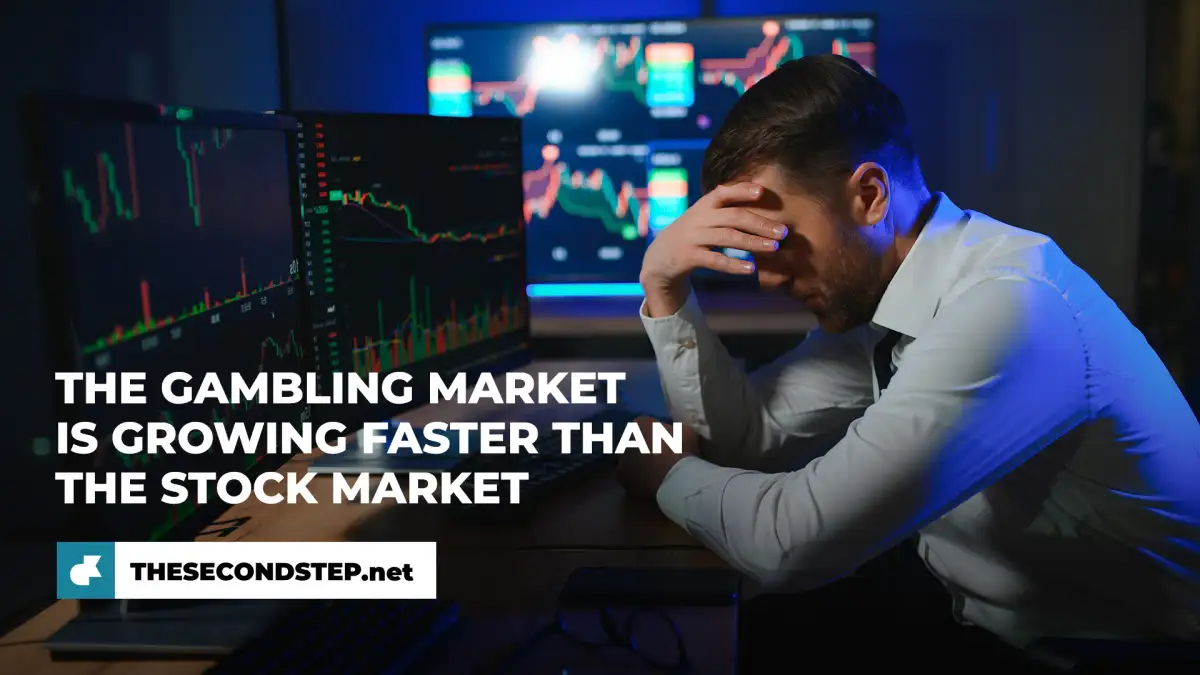
The gambling market is growing faster than the stock market
In 2024, players at the state-run online casino Total Casino wagered a combined 50 billion zloty. That's an impressive figure — one that's hard to just brush past. Even more shocking is the comparison: total investments by individual investors on the Warsaw Stock Exchange that same year came to 43 billion zloty.
That means Poles put more money into playing at the state's online casino than into building capital through the stock market.
A game where the house always wins
In 2024, players lost 2 billion zloty at Total Casino. That's not a coincidence — it's a mechanism built into the very structure of gambling. The rule is simple: in the end, the casino always wins.
"Totalizator Sportowy (Poland's state-owned gambling and lottery operator overall revenue reached 69 billion zloty in 2024, a full 32% more than the year before. The company's net profit was 0.5 billion zloty, and gambling brought the state budget 5 billion zloty (3 billion of which came from gambling tax). The state profits. People lose.
What do these numbers mean?
At first glance, you might say: it's good that a state-owned company is profitable, that the money feeds the budget. But look deeper, and you see the other side of the coin. These billions didn't come from nowhere. They're not extra funds conjured up by the company. This is money that could have gone toward:
- a down payment on a mortgage,
- growing a business,
- children's education,
- securing the future.
Instead, it ended up in online slot machines and roulette wheels.
Why does gambling pull people in harder than the stock market?
The comparison to the stock market isn't accidental. On the capital market, too, you can make or lose money. But the difference is fundamental: the stock market offers a real chance to build value over the long term, while gambling relies purely on chance.
Gambling works on emotion. A win — even a small one — triggers a release of dopamine in the brain, the neurotransmitter responsible for feelings of reward and pleasure. This is exactly the same mechanism at work with drugs or alcohol. That's why gambling can become addictive at lightning speed.
On top of that, online games are available 24 hours a day. There's no need to go to a casino — a few taps on a phone are enough. The line between entertainment and addiction blurs very quickly.
The social cost of gambling
Billions of zloty lost to gambling isn't just a problem for individual players. It also carries real social consequences:
- debt
- broken families
- mental health problems
- poverty
Gambling, then, isn't just "adult entertainment." It's a phenomenon whose effects ripple through society as a whole.
"But I'm in control…"
This is a sentence players repeat often. They believe they're in control of their bets, that they know when to stop. The statistics say otherwise. More and more people are losing control, and the number of people seeking treatment for gambling addiction in Poland keeps rising.
Gambling is deceptive. At first it seems like harmless fun, then a way to make quick money, and eventually it becomes a way to escape problems. And that's exactly the moment that's most dangerous — because it pulls a person into a spiral that's hard to break free from without help.
What can we do?
We have no control over the fact that the state will keep supporting gambling — for the state, it's a source of enormous revenue. But we can take care of ourselves and our loved ones.
That's exactly why we created a course on gambling addiction. It's material that walks through, step by step:
- how gambling pulls people in and destroys them,
- what the first signs of addiction look like,
- what psychology and spirituality have to say about it,
- what the real steps out of this addiction look like.
It's not an easy road. But every step toward freedom is worth more than one more illusion of a win. Take your first step toward freedom.