T is for Tired. Tiredness that clips your wings. The fourth element of the HALT program
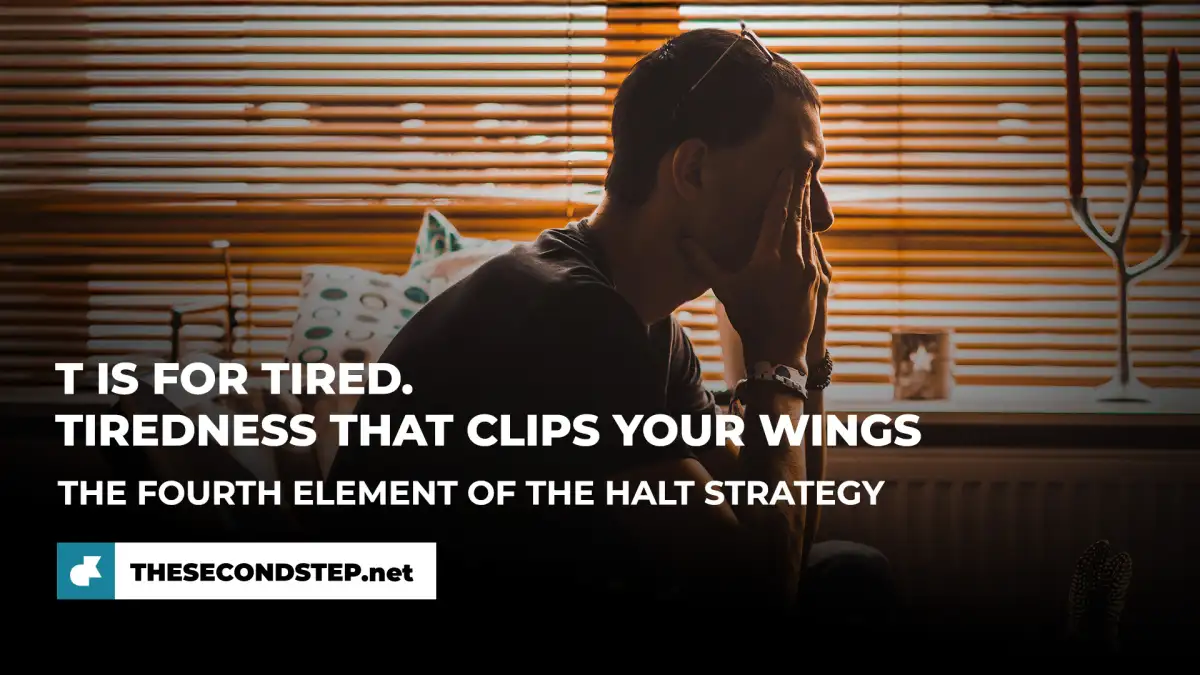
Tiredness that clips your wings. The fourth element of the HALT strategy/program
Tiredness isn't just about lack of sleep. It's a state that seeps into both body and mind, and its effects run much deeper than they seem. It can take many forms — from physical exhaustion, through mental fatigue, all the way to spiritual burnout. And even though we often shrug it off, it's exactly this state that can disarm our defenses and push us toward the things we swore that same morning we'd "never touch again." The HALT strategy teaches that tiredness is one of the most dangerous triggers, because it strips away our strength to fight — and when we have no strength left, we go back to what's familiar and easy. Even if it's destroying us.
What tiredness really is
It's not just falling asleep over your laptop or having no energy for a walk. It's also a lack of motivation, a feeling of being overwhelmed, edginess, irritability, impulsiveness, discouragement, and a sense that there's no point in even trying. Tiredness attacks slowly. It takes away your patience, drains your joy, clouds your view of reality. It often leads to thoughts like: "I can't do this," "I don't have the strength to fight anymore," "What's the point of any of it?" And that's exactly when going back to the addiction becomes an especially tempting option — because for a moment, it offers relief without any effort.
Where does tiredness come from?
Mostly from overload. Too many responsibilities, too little rest. But also from neglecting sleep, constant exposure to stimulation (screens, media, noise), a lack of balance between work and personal life, and pressure we put on ourselves. Tiredness can also have an emotional dimension: conflict, tension, loneliness, the feeling that no one understands what you're going through. It can be spiritual too — when, in prayer, in your relationship with God, in your inner life, you feel emptiness, dryness, disconnection.
Signs you're more tired than you think
- you get irritated easily and snap for no reason,
- you're short on patience — with others and with yourself,
- it's harder to concentrate, everything distracts you,
- your mood dips for no clear reason,
- you start escaping into "quick relief": sweets, TV shows, addictive habits, pornography,
- you don't feel like talking to anyone — not people, not God,
- you increasingly think: "I don't feel like trying anymore."
How to take care of yourself when you're tired
Above all — don't ignore this state. Tiredness is a signal, not a weakness. It's your body and soul saying: "I need rest before I fall apart."
- Take care of your sleep.
- Take breaks at work.
- Cut down on noise and stimulation.
- Build a rhythm into your day and week.
- Give yourself permission to be tired. You're not a robot.
It's not only the body that needs rest
If you're a person of faith — take care of your inner peace too. Being in God's presence, reading Scripture, praying — these aren't just spiritual practices. They're a way of restoring the heart. Jesus says: "Come to me, all you who are weary and burdened, and I will give you rest" (Matthew 11:28). That's not just a nice saying — it's a real promise. God truly gives rest. But you have to stop and be still to experience it.
Stop before it's too late
The whole HALT strategy is built on a simple but powerful idea: before you do something you'll regret — stop and ask yourself four questions:
- Am I hungry?
- Am I angry?
- Am I lonely?
- Am I tired?
These are questions that can save you from relapsing into addiction, but also, simply, from living through yet another day carelessly. HALT won't change your life in a single day. But it teaches you how to live more consciously, day by day. How to notice what's happening inside you before it spirals out of control. How to come back to yourself — and to your relationship with God, with people, with your own heart.
So next time something pulls you back toward the old path — don't fight the temptation head-on right away. Stop. Do a HALT check. And see what's really going on in your life.